Safeguarding Africa’s Drinking Water
Safeguarding Africa’s Drinking Water — From River to Home
Across Africa, rivers and lakes that supply cities and towns are increasingly polluted by mining, industrial discharge, agriculture, and urban runoff. While municipal water treatment plants (MWTPs) work hard to provide safe water, many were not designed to handle today’s complex and cumulative pollution loads. Even after municipal treatment, water can become re-contaminated as it flows through aging or damaged pipelines before reaching households. This exposes communities to heavy metals, harmful microbes, poor taste and odor, and unreliable water quality.
This project introduces a two-layer protection system that strengthens water safety both before water enters municipal treatment plants and again at homes and community taps — creating continuous protection from source to consumption.
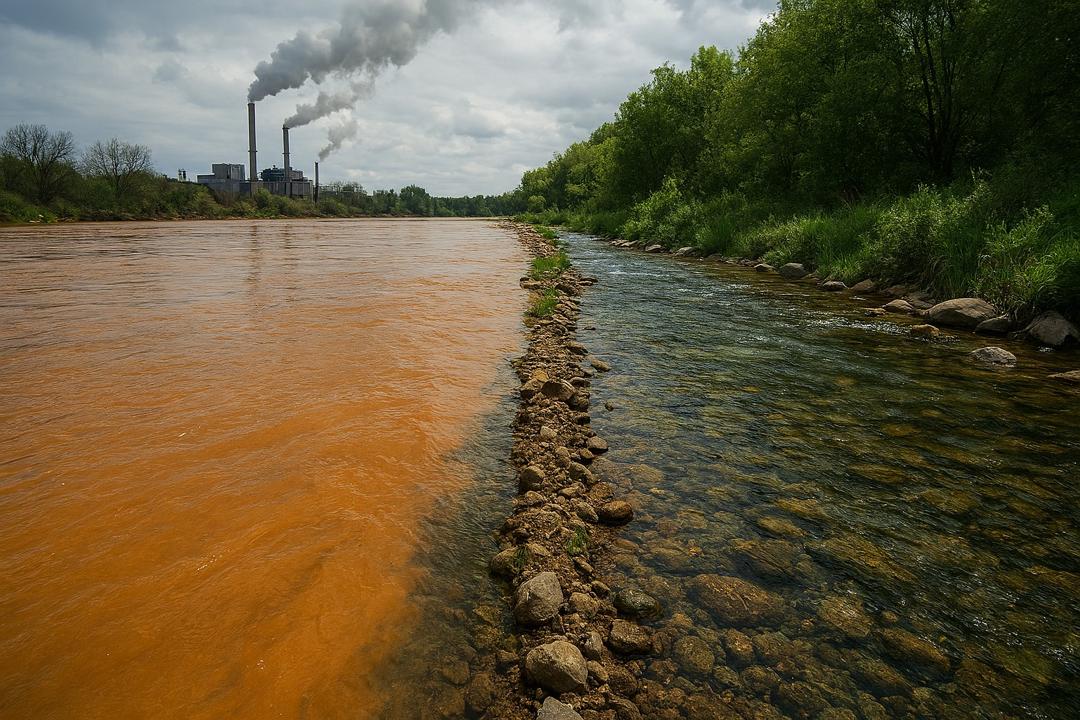
Upstream Solution: In-Situ Floating Water Treatment Platforms
Downstream Solution: Smart POE and POU Re-Treatment Units
Even treated water can pick up metals, microbes, and sediments inside pipelines. To protect families, the project installs AI enabled Point-of-Entry (POE) and Point-of-Use (POU) units as a final public-health barrier.
- POE units provide whole-house protection by removing sediment, stabilizing hardness, controlling biofilm, and
disinfecting incoming water. - POU units deliver purified drinking and cooking water by removing dissolved solids, heavy metals, and taste- and
odor-causing compounds, with optional low-energy distillation or advanced filtration.
Why This Matters for Africa
This approach is designed for African realities: limited infrastructure budgets, climate stress, and rapidly changing water quality. It is modular, solar-powered, and deployable in urban, peri-urban, and rural settings. It reduces disease risk, protects children, lowers household spending on bottled water, and creates local jobs for installation and maintenance.
Niger Delta as Pilot, Africa as the Vision
The pilot will begin in Niger Delta where oil extraction has devastated communities, contaminating water, poisoning land, destroying traditional farming and fishing livelihoods, and causing severe health issues like cancer and infant mortality, leading to protests, displacement, and ongoing legal battles against companies like Shell for cleanup and compensation, despite lax regulations and environmental neglect. The same model can then be adapted for mining regions in Ghana, Central and Southern Africa, and industrial corridors in East Africa — creating a scalable, continent-wide solution for water security.
From Emergency Response to Sustainable Water Security
Rather than waiting for costly infrastructure failures or health crises, this project shifts Africa’s water systems toward preventive, adaptive, and community-centered protection—bridging the gap between environmental remediation and household safety.
By treating pollution where it enters water bodies and protecting families at the tap, this innovation offers a new standard for resilient water security in Africa.
Clean water should not end at the treatment plant. This project ensures it reaches every home safely.